
 Save
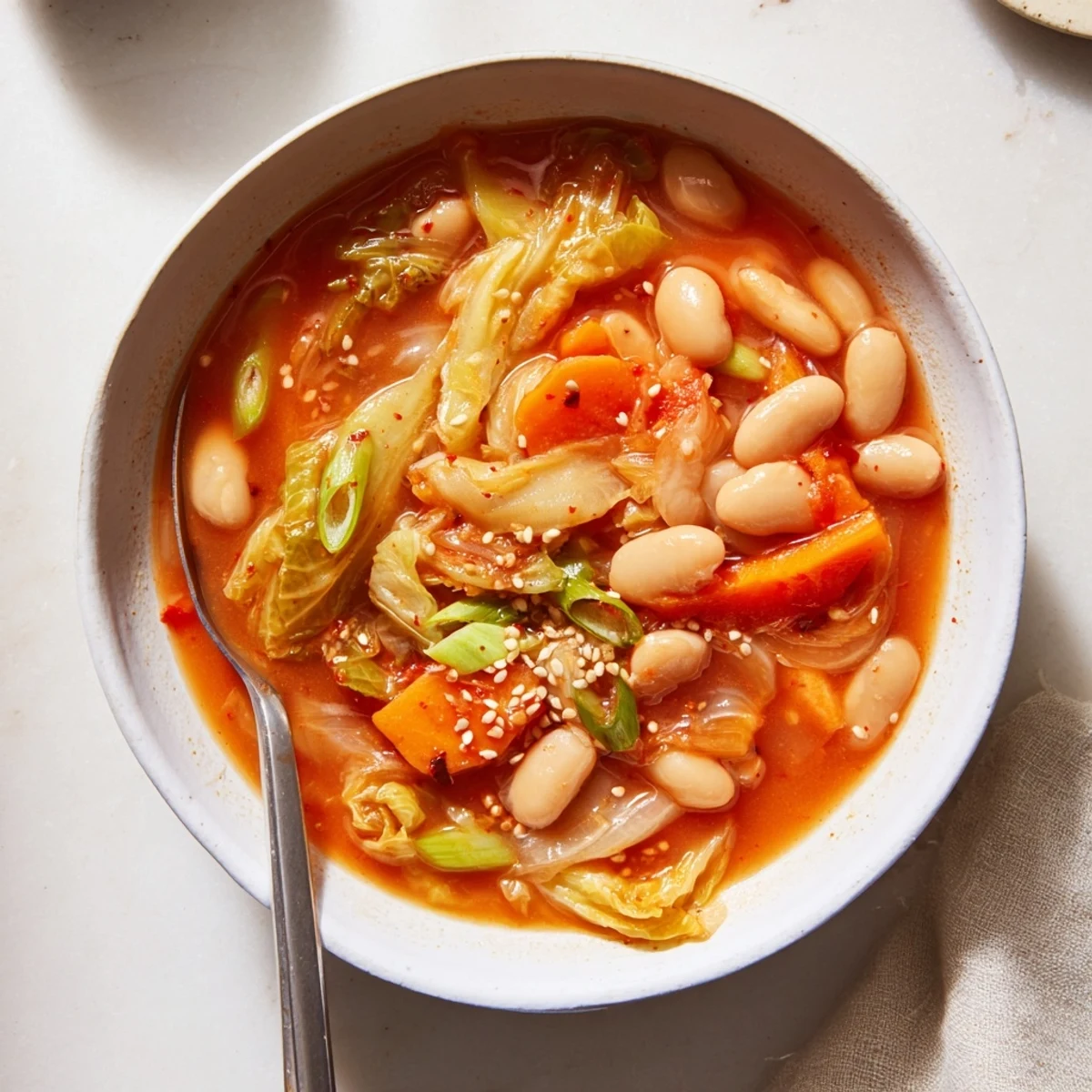
Save This hearty Korean-inspired soup combines the tangy fermentation of kimchi with creamy white beans for a protein-rich, comforting meal. The gochujang and gochugaru deliver gentle heat that builds slowly, while vegetable broth creates a light yet satisfying base.
Ready in under an hour, this soup comes together with simple pantry ingredients and requires minimal active cooking time. The fermented flavors deepen as it simmers, making it even better the next day.
Perfect for meal prep, this dairy-free and nutrient-dense bowl serves four generously and adapts easily to your spice preferences.
The first time I combined kimchi with white beans, I was half convinced it would be a disaster. I had a jar of fermented kimchi that needed using and cans of cannellini beans sitting on my counter from a failed attempt at something else entirely. That accidental combination has now become my go-to comfort meal on nights when I want something warming but don't have the energy for elaborate cooking.
My friend Sarah stayed over during a particularly brutal February storm, and I threw this together with whatever I had in the pantry. She kept asking what was in it because the flavor was so complex and layered. Now whenever temperatures drop below freezing, I get a text asking if I'm making 'that red bean soup.'
Ingredients
- 1 tablespoon vegetable oil: A neutral oil works best here since the kimchi and sesame oil provide plenty of flavor
- 1 medium yellow onion, diced: Yellow onions become sweeter as they cook, balancing the spicy elements naturally
- 2 cloves garlic, minced: Fresh garlic is non-negotiable here since it forms the aromatic foundation
- 1 medium carrot, peeled and sliced: Carrots add subtle sweetness and texture that rounds out the heat
- 1 cup napa cabbage, chopped: This is optional but adds lovely texture if you happen to have some on hand
- 1 1/2 cups kimchi, chopped plus 2 tablespoons kimchi juice: Older, more fermented kimchi packs more flavor and actually works better than fresh
- 1 tablespoon gochujang: This Korean chili paste adds depth and umami beyond just heat
- 1 teaspoon gochugaru: Optional but recommended if you love that authentic Korean restaurant kick
- 1/2 teaspoon freshly ground black pepper: Adds a backend warmth that complements the Asian spices
- 2 cans (15 oz each) white beans, drained and rinsed: Cannellini beans are my top choice for their creamy texture
- 4 cups vegetable broth: Low sodium broth gives you control over the final seasoning level
- 1 tablespoon soy sauce: Use tamari if you need this to be gluten-free
- 1 teaspoon toasted sesame oil: This finishing oil is the secret to that restaurant-quality aroma
- 2 scallions, thinly sliced: Fresh scallions add a pop of color and mild onion flavor
- 1 teaspoon toasted sesame seeds: These add crunch and make the final presentation look intentional
Instructions
- Build your flavor foundation:
- Heat the vegetable oil in a large pot over medium heat. Add the onion and carrot, then sauté for 4 to 5 minutes until they begin to soften and the onion turns translucent.
- Wake up the garlic:
- Stir in the minced garlic and cook for just 1 minute until fragrant. Watch carefully so it does not brown or turn bitter.
- Develop the kimchi base:
- Add the chopped kimchi and cook for 3 minutes, stirring occasionally. The kimchi will start to release its juices and become more aromatic as it heats through.
- Layer in the spices:
- Mix in the gochujang, gochugaru if using, and black pepper. Stir thoroughly to coat every vegetable evenly and let the spices bloom in the heat.
- Create the soup body:
- Add the white beans, vegetable broth, kimchi juice, and soy sauce. Bring everything to a boil, then reduce heat and simmer gently for 20 minutes so flavors can meld.
- Add texture if desired:
- If you are using napa cabbage, add it during the last 10 minutes of simmering so it retains some bite rather than becoming mushy.
- Finish with finesse:
- Stir in the toasted sesame oil just before removing from heat. Taste the soup and adjust the seasoning if needed, knowing that flavors will continue to develop.
- Garnish and serve:
- Ladle the hot soup into bowls and scatter scallions and toasted sesame seeds over the top. Serve immediately while steaming hot.
 Save
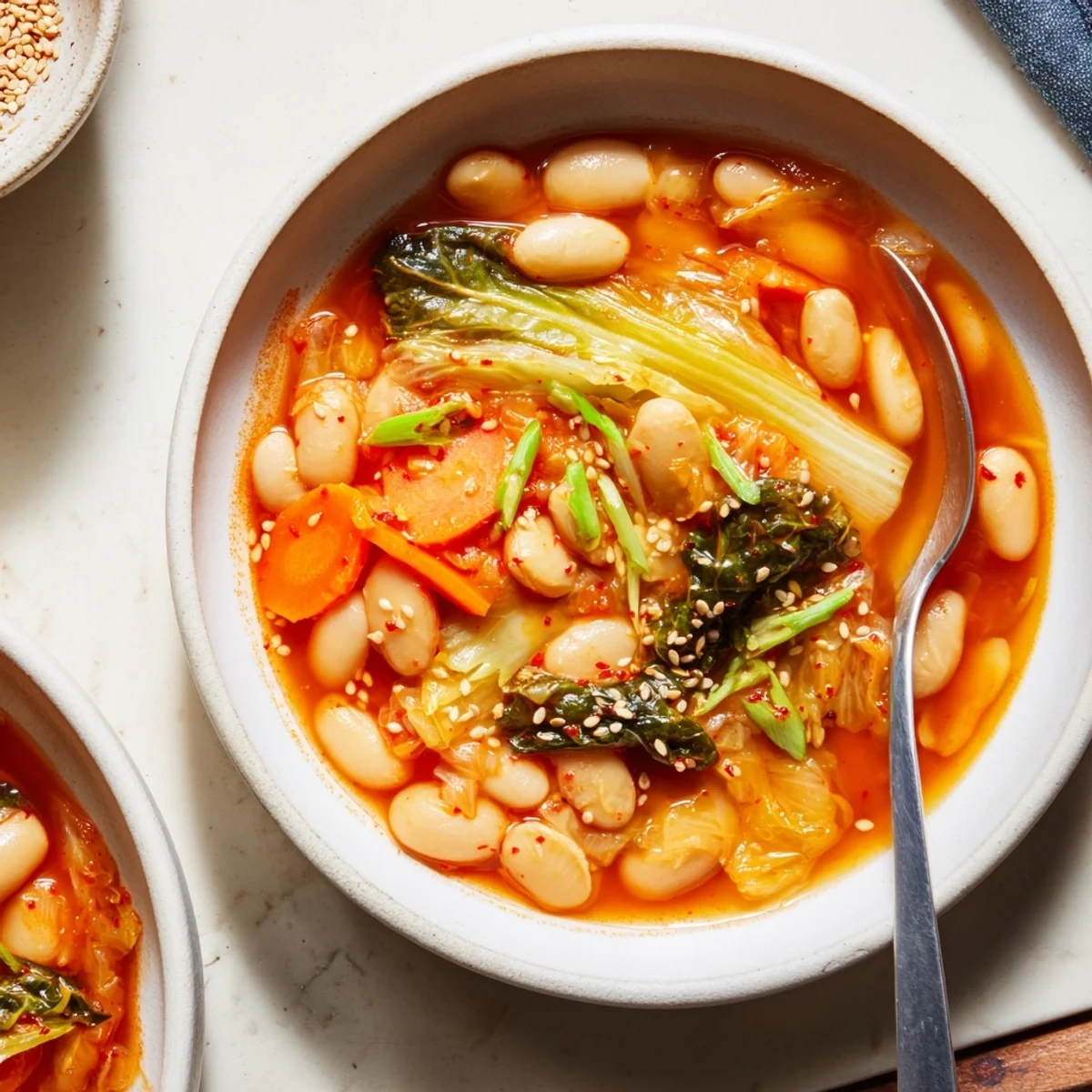
Save This soup became my winter staple during a year when I was trying to cook more plant-based meals without feeling deprived. My meat-loving partner actually requests this more often than I do now, which might be the highest compliment possible.
Making It Your Own
I have discovered that adding cubed firm tofu during the last 10 minutes creates a more substantial meal that still keeps the vegan promise intact. The tofu absorbs all those spicy, tangy flavors and becomes incredibly satisfying in each spoonful.
Spice Balance Wisdom
Some kimchi brands pack significantly more heat than others, so taste your kimchi before adding the gochugaru. I have made the mistake of assuming all kimchi is created equal and ended up with soup that was practically inedible to anyone with normal spice tolerance.
Serving Suggestions
A bowl of steamed white rice turns this from soup to a complete meal that will keep you full for hours. The rice soaks up that spicy, savory broth and transforms the dish into something that feels like it came from a Korean grandmother's kitchen.
- Warm bowls make a surprising difference in how long the soup stays hot at the table
- Extra gochujang on the side lets spice lovers customize their portion
- A simple cucumber salad with rice vinegar cuts through the richness beautifully
 Save
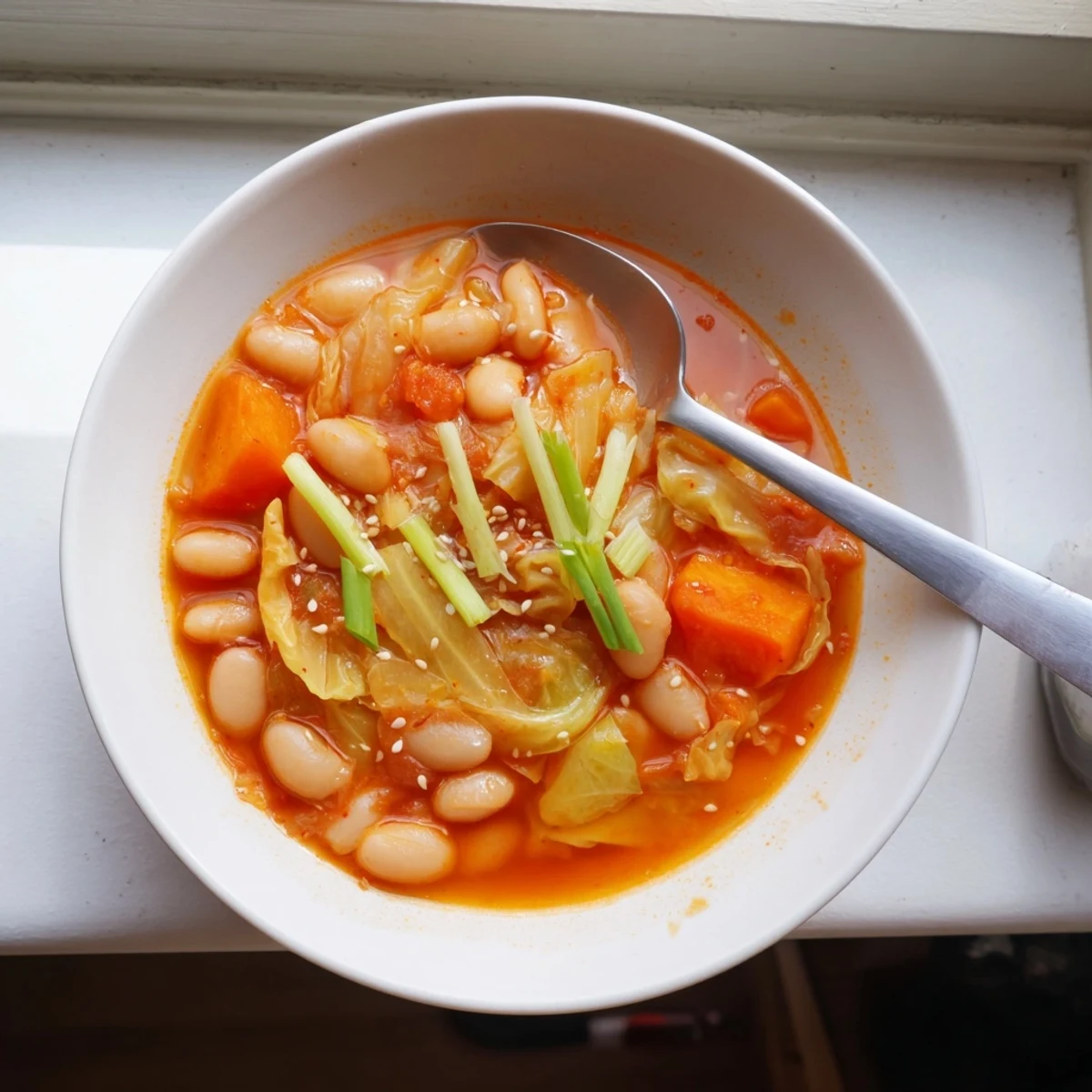
Save There is something deeply comforting about a soup that manages to be both fiery and soothing at the same time, like a warm blanket that still wakes you up.
Recipe Questions & Answers
- → Can I make this soup less spicy?
-
Absolutely. Start with half the gochujang and omit the gochugaru entirely. You can always add more spice gradually once you taste the finished soup.
- → What type of white beans work best?
-
Cannellini beans offer the creamiest texture, but navy beans or great northern beans work beautifully too. Rinse them well to remove excess sodium before adding.
- → How long does this soup keep in the refrigerator?
-
Stored in an airtight container, this soup keeps for 4-5 days. The flavors actually improve overnight as the kimchi continues to ferment and meld with the broth.
- → Can I freeze this soup?
-
Yes, freeze for up to 3 months. The texture may change slightly, but reheating brings it back together. Leave out garnishes until serving time.
- → Is traditional kimchi always vegan?
-
Not necessarily. Many kimchi brands include fish sauce or shrimp paste. Look for specifically labeled vegan kimchi or check ingredients carefully if dietary restrictions apply.
- → What can I serve alongside this soup?
-
Steamed white or brown rice makes this more substantial. Crusty bread, roasted vegetables, or a simple cucumber salad also complement the bold flavors nicely.