
 Save
Save This velvety soup combines roasted butternut squash with rich coconut milk and warming spices like cumin, coriander, turmeric, and cinnamon. The roasting process deepens the squash's natural sweetness while the spices add complexity. Ready in about an hour, this comforting bowl serves four and is naturally vegan and gluten-free.
The first time I made this soup was during an unexpectedly cold October weekend. I had a butternut squash sitting on my counter that I'd bought on impulse at the farmers market, and my apartment felt drafty enough that something warm and spiced seemed like the only logical choice.
I served this to friends who dropped by after a hiking trip, still wearing their muddy boots and flushed cheeks. They hovered over the stove, breathing in the cinnamon and cumin, asking if there was enough for seconds. There was barely enough.
Ingredients
- 1 medium butternut squash: Roasting it first concentrates the sugars and creates caramelized edges that blend into velvety richness
- 1 medium yellow onion: The foundation that becomes sweet and translucent as it sautés with the carrot
- 2 cloves garlic: Add it after the onions soften so it doesnt burn and turn bitter
- 1 medium carrot: Contributes extra sweetness and body to the final purée
- 1-inch fresh ginger: Grating it releases more flavor than chopping, and it brightens the warm spices
- 3 cups vegetable broth: Use a high-quality broth since it provides half the flavor foundation
- 1 (14 oz) can coconut milk: Full fat makes all the difference here—light coconut milk leaves the soup tasting thin and wistful
- 1 tsp ground cumin: Earthy and essential, it anchors the spice blend
- 1/2 tsp ground coriander: Adds subtle citrus notes that keep the soup from feeling too heavy
- 1/2 tsp ground turmeric: Mostly for color, but also contributes a quiet earthiness
- 1/4 tsp ground cinnamon: Just enough to hint at warmth without making it taste like dessert
- 1/4 tsp cayenne pepper: Optional, but a little heat makes the creaminess feel intentional rather than cloying
- Salt and black pepper: Taste repeatedly at the end—coconut milk needs more salt than dairy cream does
Instructions
- Roast the squash:
- Toss the cubed squash with olive oil, salt, and pepper until coated, then spread it on a parchment-lined baking sheet. Roast at 400°F for 25–30 minutes, turning once halfway through, until the edges are golden and a fork slides in easily.
- Sauté the aromatics:
- Heat the remaining olive oil in your pot over medium heat, then add the onion and carrot. Cook for about 5 minutes until the onion is translucent and the carrot has lost its raw crunch.
- Add the garlic and ginger:
- Stir in the minced garlic and grated ginger, cooking for just 1 minute until fragrant. You want them to release their aroma without taking on any color.
- Toast the spices:
- Sprinkle in the cumin, coriander, turmeric, cinnamon, and cayenne. Stir constantly for 30 seconds—the spices will bloom in the hot oil and smell incredible.
- Combine and simmer:
- Add the roasted squash to the pot, pour in the vegetable broth, and bring everything to a gentle simmer. Let it cook for 10 minutes so the flavors can really get to know each other.
- Add coconut milk:
- Pour in the coconut milk and stir to combine. Remove the pot from heat—blending hot soup requires caution, and the flavors are ready now anyway.
- Purée until smooth:
- Use an immersion blender directly in the pot, or work in batches with a regular blender. Blend until completely silky, with no visible texture remaining.
- Season and serve:
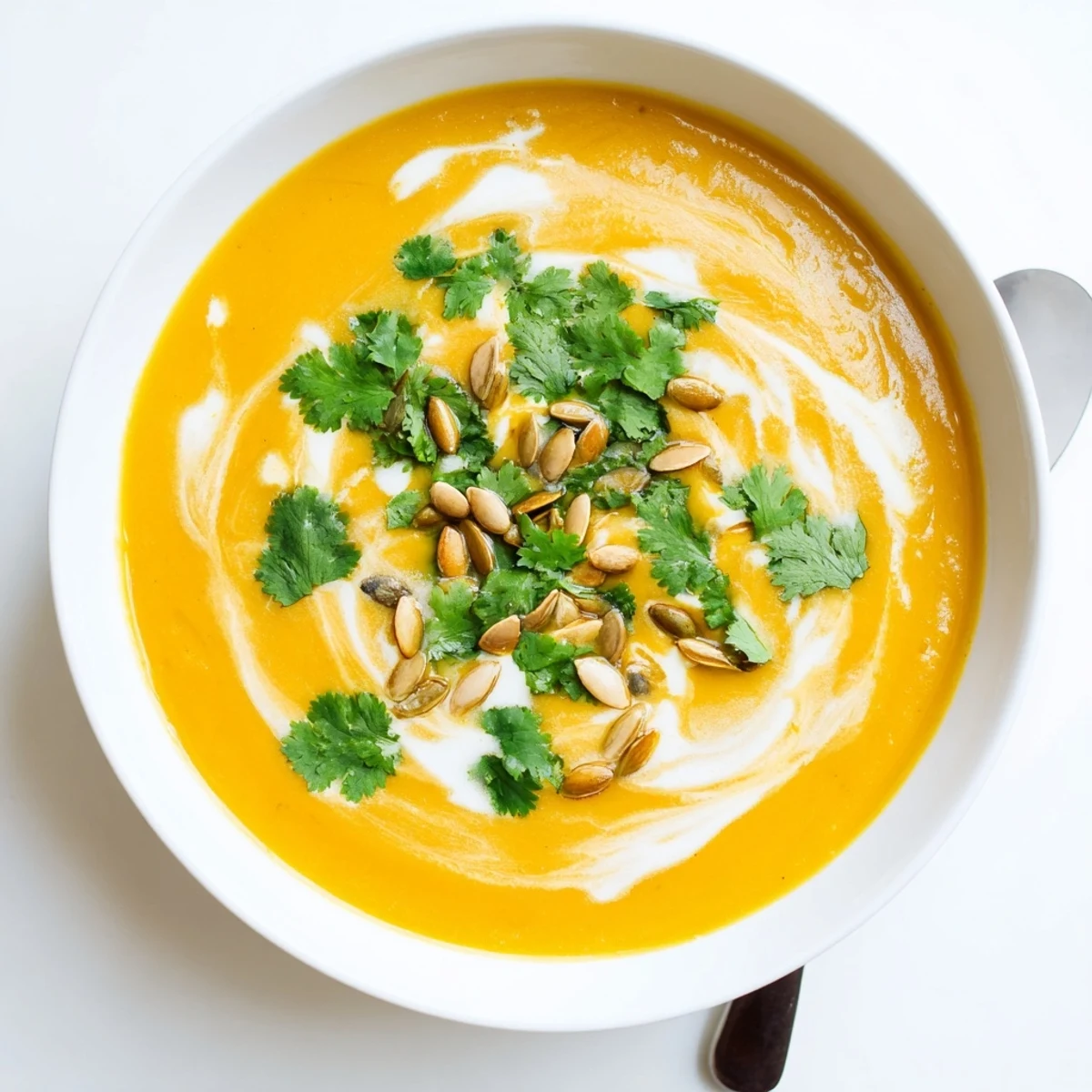
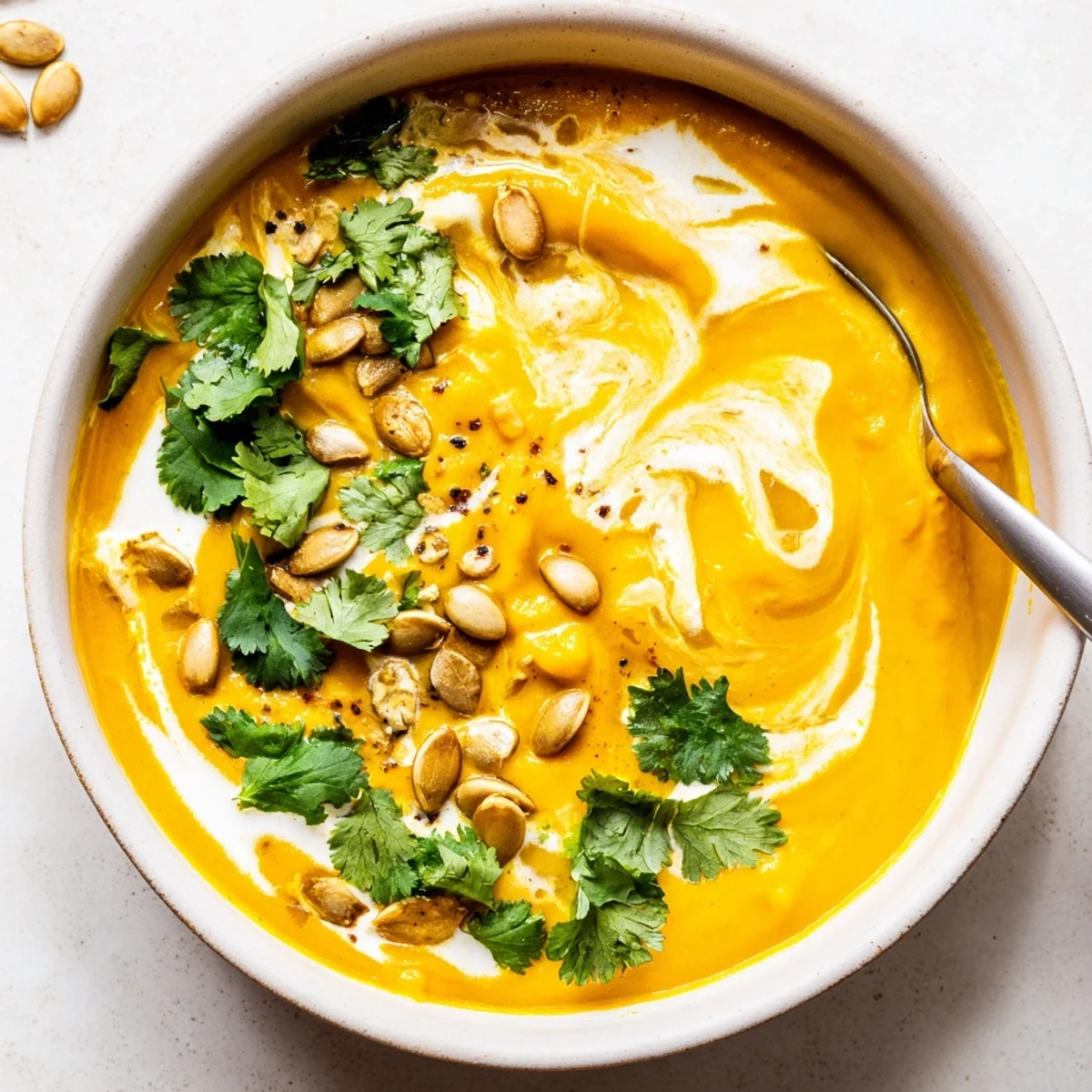
- Taste the soup and add more salt and pepper than you think necessary. Ladle into bowls and top with fresh cilantro, toasted pumpkin seeds, and an extra swirl of coconut milk if you're feeling fancy.
 Save
Save This soup has become my go-to when someone needs comfort. I've made it for heartbreak, for job losses, for celebration, and just because Tuesday called for something orange and warm.
Making It Your Own
Sometimes I add a cup of red lentils during the simmer step—they practically disappear into the soup but add protein and make it even more substantial. Chickpeas work too if you prefer some texture remaining.
Serving Suggestions
Crusty bread is non-negotiable for me, but naan creates these perfect soft scoops that catch every drop. If you want to keep it light, a simple green salad with sharp vinaigrette cuts through the creaminess beautifully.
Storage and Reheating
This soup keeps remarkably well in the refrigerator for up to five days, and it freezes beautifully for up to three months. When reheating, add a splash of broth or water if it seems too thick—the coconut milk can separate slightly in the fridge but will smooth out again with gentle warming.
- Never bring coconut milk soup to a rolling boil when reheating—it can separate and become grainy
- The flavors actually improve after a night in the fridge, so this might be better as make-ahead food
- If freezing, leave a little room at the top of the container since liquids expand when frozen
 Save
Save There's something about a bowl of this soup that makes the world outside feel a little less demanding. I hope it brings that same quiet to your kitchen.
Recipe Questions & Answers
- → Can I make this soup ahead of time?
-
Yes, this soup actually tastes better the next day as flavors have time to meld. Store in an airtight container in the refrigerator for up to 4 days. Reheat gently over medium-low heat, stirring occasionally.
- → How can I make this soup thicker?
-
For extra body, add a peeled and diced potato during the sauté step, or stir in cooked red lentils before blending. You can also reduce the broth by 1/2 cup or use less coconut milk for a thicker consistency.
- → What can I substitute for coconut milk?
-
Heavy cream creates similar richness, or use cashew cream for a dairy-free alternative. For a lighter version, use additional vegetable broth or half coconut milk and half broth. The flavor profile will shift slightly.
- → Is this soup freezer-friendly?
-
Absolutely. Cool completely before transferring to freezer-safe containers. Leave 1 inch of space at the top as liquids expand when frozen. Thaw overnight in the refrigerator and reheat gently. Keeps well for up to 3 months.
- → How do I adjust the spice level?
-
Start with 1/8 teaspoon cayenne for mild heat, or omit entirely. For medium spice, use the full 1/4 teaspoon. You can always add more after blending, but remember flavors intensify slightly as the soup sits.
- → What's the purpose of roasting the squash first?
-
Roasting concentrates the butternut squash's natural sugars and adds subtle caramelized notes you can't achieve through boiling alone. This extra step creates deeper, more complex flavor in the final soup.