
 Save
Save Roast cubed celeriac, onion, garlic and carrot until golden to deepen flavor, then saute sliced celery. Add drained white beans, thyme and vegetable broth; simmer briefly. Puree until smooth with an immersion blender, stir in cream and adjust seasoning. Serves four; total time about 1 hour. Freeze well; finish with parsley and an olive oil drizzle.
The smell of celeriac roasting in the oven is one of those quiet surprises that fills the whole kitchen before you even realize its happening, earthy and sweet and vaguely like someone is baking something they should not be baking with a root vegetable.
I made this on a rainy Tuesday when the fridge was nearly empty and a lone celeriac had been sitting in the crisper drawer for two weeks looking increasingly alien.
Ingredients
- 1 large celeriac (about 700 g): Peel it thoroughly because the skin is tough and fibrous, and cut uniformly so every cube roasts evenly.
- 1 medium yellow onion: Rough chopped is fine here since everything gets blended smooth at the end anyway.
- 2 cloves garlic: Leave them whole for roasting because they turn sweet and mellow in the oven heat.
- 1 medium carrot: Adds a subtle sweetness that balances the earthiness of the celeriac perfectly.
- 1 stalk celery: Sautéed fresh rather than roasted to give the soup a bright backbone of flavor.
- 1 can (400 g) white beans: Cannellini or Great Northern both work, just drain and rinse them well to avoid any tinny taste.
- 1 liter vegetable broth: Low sodium is best so you can control the salt level as you go.
- 120 ml heavy cream or non dairy cream: This is optional but it adds a lovely silky finish, and coconut cream works surprisingly well for a vegan version.
- 2 tbsp olive oil: Split between roasting the vegetables and sautéing the celery.
- 1 tsp fresh thyme leaves (or half tsp dried): Thyme and celeriac are old friends and you should trust that pairing completely.
- Ground black pepper and fine sea salt: Season the vegetables before roasting and adjust again at the very end.
Instructions
- Get the oven hot:
- Preheat to 200 degrees Celsius (400 degrees Fahrenheit) and line a baking sheet with parchment paper if you want easier cleanup.
- Roast the roots:
- Toss the celeriac cubes, onion, garlic, and carrot with one tablespoon of olive oil, salt, and pepper, then spread everything in a single layer on the baking sheet and roast for 25 to 30 minutes until golden and tender, stirring once halfway through so nothing sticks or burns.
- Start the soup base:
- In a large pot, heat the remaining olive oil over medium heat and sauté the sliced celery for about 3 minutes until it softens and smells fragrant.
- Bring it all together:
- Add the roasted vegetables to the pot along with the drained white beans and thyme, then pour in the vegetable broth and stir to combine everything.
- Simmer and meld:
- Bring the pot to a boil, then reduce the heat and let it simmer gently for 10 minutes so the flavors have time to get acquainted.
- Blend until silky:
- Remove from heat and use an immersion blender to puree the soup until completely smooth, or carefully transfer in batches to a countertop blender if that is what you have.
- Finish and serve:
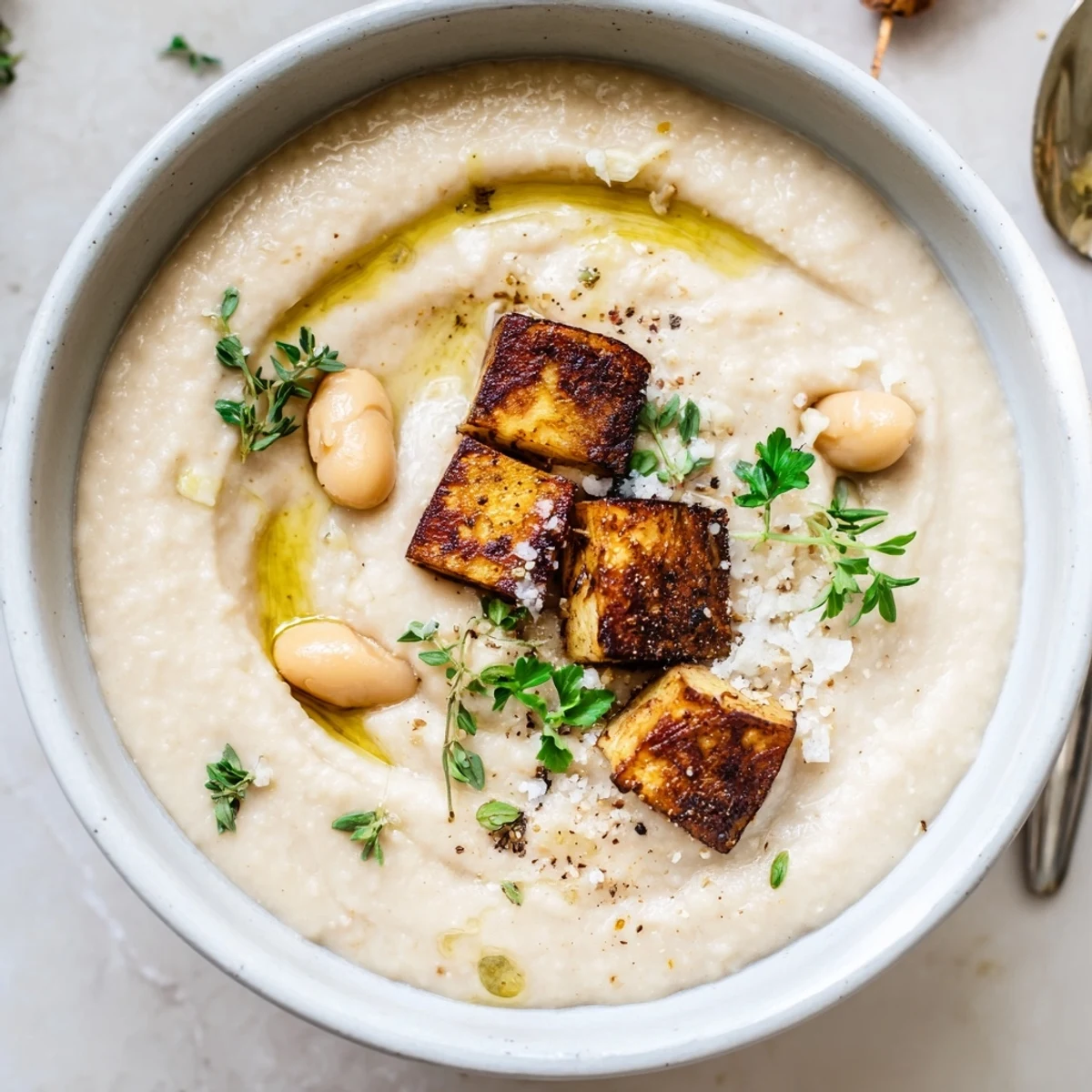
- Stir in the cream, taste for salt and pepper, reheat gently if needed, and ladle into bowls with a scattering of fresh parsley and an extra drizzle of olive oil on top.
 Save
Save My neighbor knocked on the door that Tuesday evening to return a borrowed bowl and ended up sitting at the kitchen counter eating soup with a chunk of bread, telling me about her mother who used to grow celeriac in her garden in Austria.
What to Serve Alongside
A chunk of crusty sourdough is the obvious choice and honestly the only correct one, though a simple green salad with a sharp vinaigrette cuts through the richness nicely if you want a fuller meal.
Making It Your Own
You can swap half the celeriac for parsnip or potato if the celeriac flavor feels too strong, and I have thrown in a handful of kale at the end before blending for extra color and body.
Storage and Freezing
This soup keeps in the fridge for up to four days and freezes for up to two months without losing any of its creamy texture.
- Let it cool completely before transferring to containers to prevent condensation.
- Leave a little room at the top of the container because it expands when frozen.
- Always taste and re season after thawing because cold dulls everything including salt.
 Save
Save Some soups are dinner and some soups are an excuse to stand at the stove on a cold evening doing absolutely nothing complicated, and this one is both.
Recipe Questions & Answers
- → Can I use dried white beans instead of canned?
-
Yes. Soak and cook dried beans until tender, then add them to the pot with slightly less broth since cooked beans absorb less liquid than canned. Taste and adjust salt after blending.
- → What’s the best way to roast celeriac for maximum flavor?
-
Toss 1-inch celeriac cubes with a tablespoon of oil, salt and pepper. Roast at 200°C/400°F on a single layer for 25–30 minutes, turning once, until golden and caramelized to bring out nutty, sweet notes.
- → How do I make this dairy-free?
-
Use a non-dairy cream (oat or cashew work well) or omit the cream and finish with an extra drizzle of good olive oil for richness while keeping it dairy-free.
- → Can I swap celeriac for another root vegetable?
-
Yes. Parsnip, potato or a mix of celeriac and potato work well. Parsnip adds sweetness; potato yields a silkier texture. Adjust roasting time slightly for different sizes.
- → How should I store and reheat leftovers?
-
Cool quickly and refrigerate up to 3 days or freeze for up to 2 months. Reheat gently on the stove over low heat, stirring in a little broth if it thickens.
- → How can I add extra depth or texture to the finished dish?
-
Stir in a pinch of ground nutmeg or smoked paprika for depth. Reserve a few whole beans before blending and add them back in for a chunkier texture, or top bowls with toasted seeds or crisp herbs.