
 Save
Save Roasted cauliflower transforms into something truly special when paired with a bright, creamy lemon-herb tahini drizzle. The florets are tossed with olive oil, cumin, salt, and pepper, then roasted at 425°F until deeply golden and fork-tender.
The tahini sauce comes together in minutes—whisk tahini with fresh lemon juice, garlic, olive oil, chopped parsley, and dill until silky and pourable. A generous drizzle over the warm roasted cauliflower, finished with toasted sesame seeds and lemon zest, creates a dish that's equally at home as a side or a light plant-based main.
The smell of cumin toasting on cauliflower is one of those scents that pulls people into the kitchen before dinner is even ready. My neighbor actually knocked on my door once asking what I was cooking, and she ended up staying for the entire meal. This roasted cauliflower with lemon herb tahini has become my go-to dish for potlucks, Tuesday nights, and any evening that needs a little brightness. It is simple, forgiving, and genuinely exciting for something made from such humble ingredients.
A friend brought this to a rooftop gathering last summer, and I watched three people who claimed they did not like cauliflower go back for seconds. I texted her that night for the recipe, made it the following weekend, and have probably cooked it forty times since. Something about the combination of roasted edges and that creamy, herb flecked sauce makes it feel like a celebration rather than a vegetable side.
Ingredients
- 1 large head cauliflower, cut into florets: Try to keep the pieces similar in size so everything roasts evenly and you avoid the frustration of some burnt and some underdone.
- 2 tablespoons olive oil: A good quality oil makes a real difference here since the cauliflower absorbs it directly.
- 1/2 teaspoon sea salt: Do not skimp on this, as proper salting brings out the natural sweetness of roasted cauliflower.
- 1/4 teaspoon freshly ground black pepper: Freshly cracked pepper adds a gentle warmth that pre ground simply cannot match.
- 1/2 teaspoon ground cumin (optional): This is the ingredient that makes people ask what your secret is, so I highly recommend including it.
- 1/3 cup tahini: Stir your tahini well before measuring, since it often separates in the jar and you want a smooth, pourable consistency.
- 1/4 cup water (plus more as needed): The tahini will seize at first, but keep whisking and adding water and it will transform into something silky.
- 2 tablespoons freshly squeezed lemon juice: Fresh lemon is nonnegotiable here, as bottled juice tastes flat against the earthy tahini.
- 1 tablespoon extra virgin olive oil: This enriches the drizzle and helps it coat the cauliflower beautifully.
- 1 small garlic clove, finely grated: Grating rather than mincing creates a paste that blends seamlessly into the sauce.
- 2 tablespoons chopped fresh parsley: Flat leaf parsley brings a clean, grassy note that balances the richness.
- 1 tablespoon chopped fresh dill (or mint): Dill adds a surprising sweetness, but mint works beautifully if you want something cooler.
- 1/4 teaspoon sea salt and 1/4 teaspoon ground cumin (optional): These season the drizzle and echo the flavors on the roasted cauliflower.
- Garnishes (toasted sesame seeds, extra herbs, lemon zest): These finishing touches add texture and a burst of freshness that makes the dish feel complete.
Instructions
- Preheat and prepare:
- Set your oven to 425 degrees Fahrenheit and line a baking sheet with parchment paper. Give the oven a good fifteen minutes to get truly hot, because that initial blast of heat is what creates those gorgeous caramelized edges.
- Season the cauliflower:
- Toss the florets with olive oil, salt, pepper, and cumin in a large bowl until every piece is lightly coated. Spread them on the baking sheet in a single layer with space between each floret, since crowding leads to steaming rather than roasting.
- Roast until golden:
- Roast for 25 to 30 minutes, flipping the florets halfway through so they brown on multiple sides. You are looking for deep golden spots and a knife that slides easily through the thickest parts.
- Whisk the tahini drizzle:
- While the cauliflower roasts, whisk together the tahini, water, lemon juice, olive oil, garlic, parsley, dill, salt, and cumin in a bowl. The mixture may look clumpy at first, but keep adding water one tablespoon at a time and it will turn into a luscious, pourable sauce.
- Assemble and garnish:
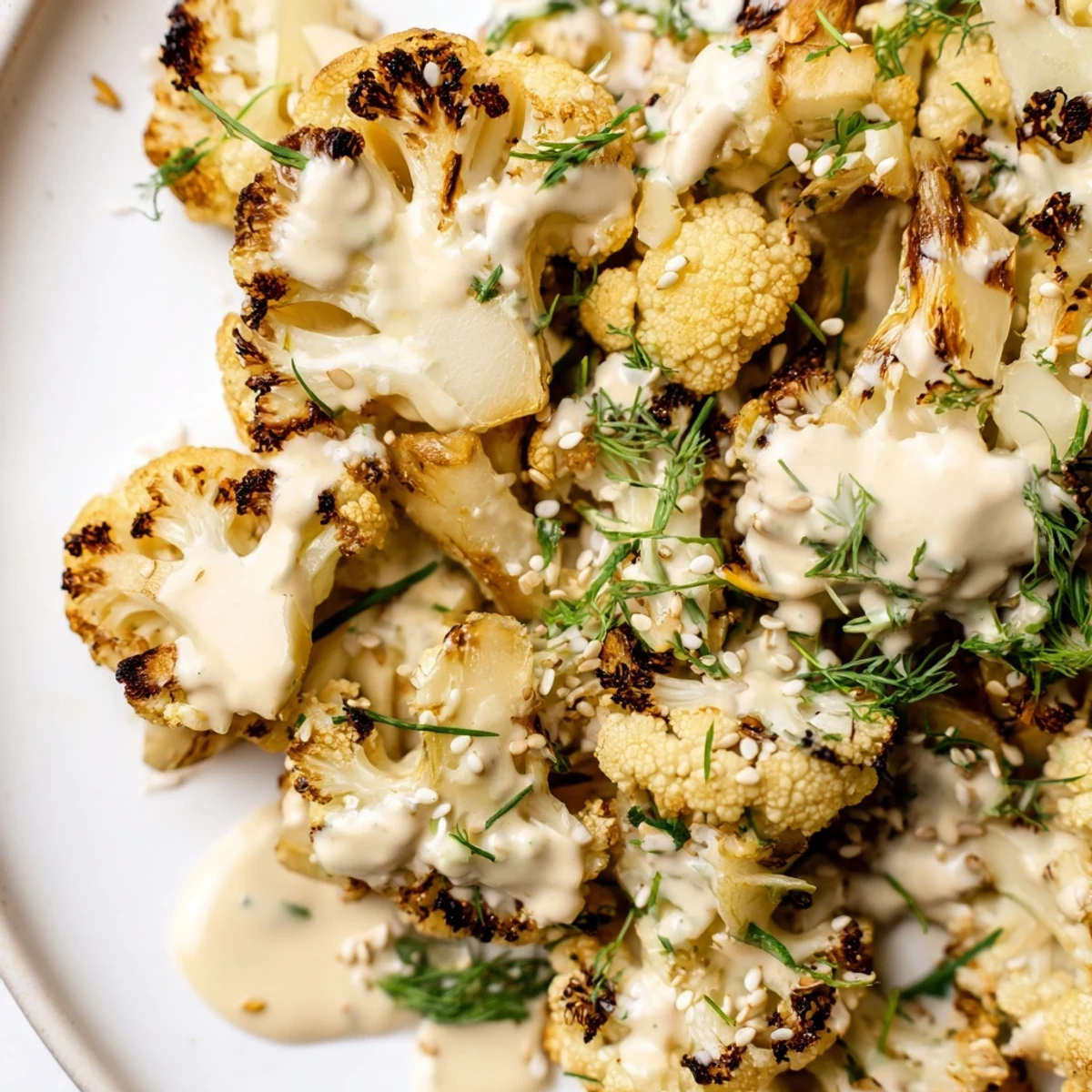
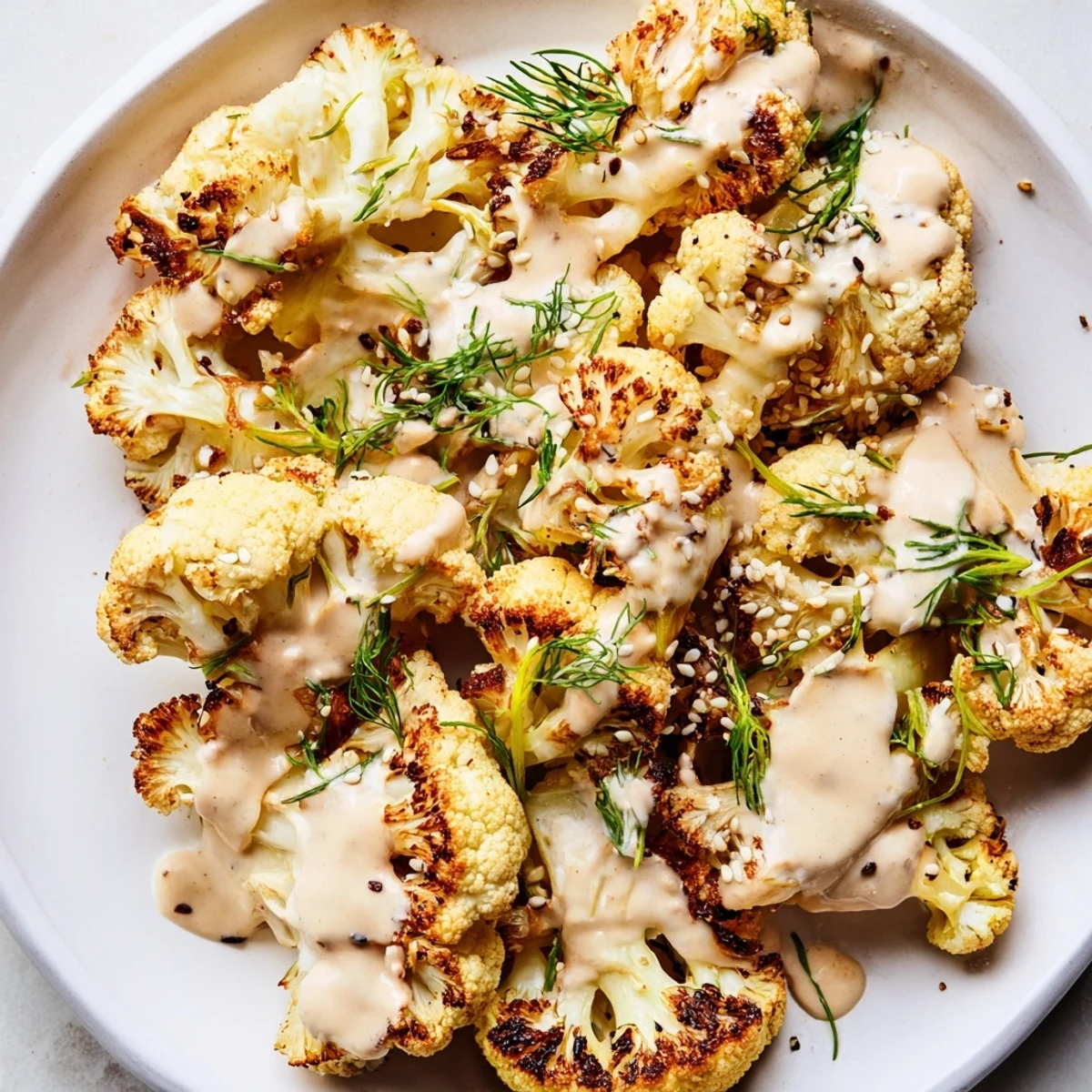
- Arrange the hot roasted cauliflower on a serving platter and drizzle generously with the tahini sauce, letting it pool in the crevices. Scatter toasted sesame seeds, extra herbs, and lemon zest over the top and serve warm or at room temperature.
 Save
Save The first time I served this at a dinner party, someone picked up the platter and poured the remaining tahini sauce directly onto their plate. That moment when a dish makes people abandon table manners is when you know you have a keeper.
Getting The Best Roast
Dry your cauliflower florets thoroughly after washing, because any lingering moisture creates steam and prevents those sought after crispy edges. I learned this the hard way after impatiently tossing wet florets onto a sheet pan and ending up with something closer to boiled cauliflower. Cutting flat edges on the florets so they sit flush against the pan also maximizes the browning surface area and gives you more of those deeply flavored charred spots.
Serving Suggestions
This dish shines piled over warm couscous, brown rice, or quinoa for a satisfying light meal that feels complete without any additional protein. During warmer months, I love serving it alongside grilled flatbread with a simple cucumber and tomato salad. The tahini drizzle doubles as a dip for raw vegetables or a spread for sandwiches, so make extra if you want versatility throughout the week.
Storage And Make Ahead Tips
The roasted cauliflower stores beautifully in an airtight container in the refrigerator for up to four days, though it is best reheated in a hot oven or air fryer to restore crispness. The tahini drizzle can be made up to three days ahead and kept chilled, but you will likely need to whisk in a splash of water to loosen it after refrigeration since it thickens as it sits.
- Store the sauce and cauliflower separately to keep the florets from going soft in the fridge.
- Freeze roasted cauliflower for up to two months, but the tahini drizzle is best enjoyed fresh.
- Always taste the sauce before serving and adjust lemon or salt, since flavors dull slightly after chilling.
 Save
Save This is the kind of recipe that reminds you how magical simple food can be when you treat each step with care. Share it with someone who thinks they do not like cauliflower, and watch what happens.
Recipe Questions & Answers
- → Can I make the tahini drizzle ahead of time?
-
Yes, the tahini drizzle can be prepared up to 3 days in advance and stored in an airtight container in the refrigerator. It will thicken as it sits, so simply whisk in a splash of water before serving to restore its creamy, pourable consistency.
- → What temperature should the oven be for roasting cauliflower?
-
425°F (220°C) is ideal for roasting cauliflower. This high heat ensures the florets develop a deep golden-brown exterior while remaining tender inside. Spread them in an even layer without overcrowding the pan for the best caramelization.
- → Can I substitute the herbs in the tahini sauce?
-
Absolutely. Parsley and dill work beautifully, but you can swap them for fresh cilantro, mint, basil, or chives depending on what you have on hand. Each herb brings a slightly different flavor profile—mint adds freshness, while cilantro leans more toward Middle Eastern notes.
- → How do I store and reheat leftovers?
-
Store leftover cauliflower and tahini drizzle separately in airtight containers in the refrigerator for up to 4 days. Reheat the cauliflower in a 375°F oven or air fryer for about 10 minutes to restore crispness. The sauce can be served cold or at room temperature.
- → Is this dish suitable for meal prep?
-
Yes, this dish works well for meal prep. Roast a large batch of cauliflower and prepare the tahini sauce separately. The components store well and can be assembled quickly throughout the week. Serve over grains like quinoa or couscous for a complete meal.
- → Why is my tahini sauce clumpy and how do I fix it?
-
Tahini can seize and become clumpy when liquid is added too quickly. To fix this, keep whisking while gradually adding warm water one tablespoon at a time until the sauce smooths out and reaches a drizzle-worthy consistency. Fresh lemon juice also helps emulsify the mixture.